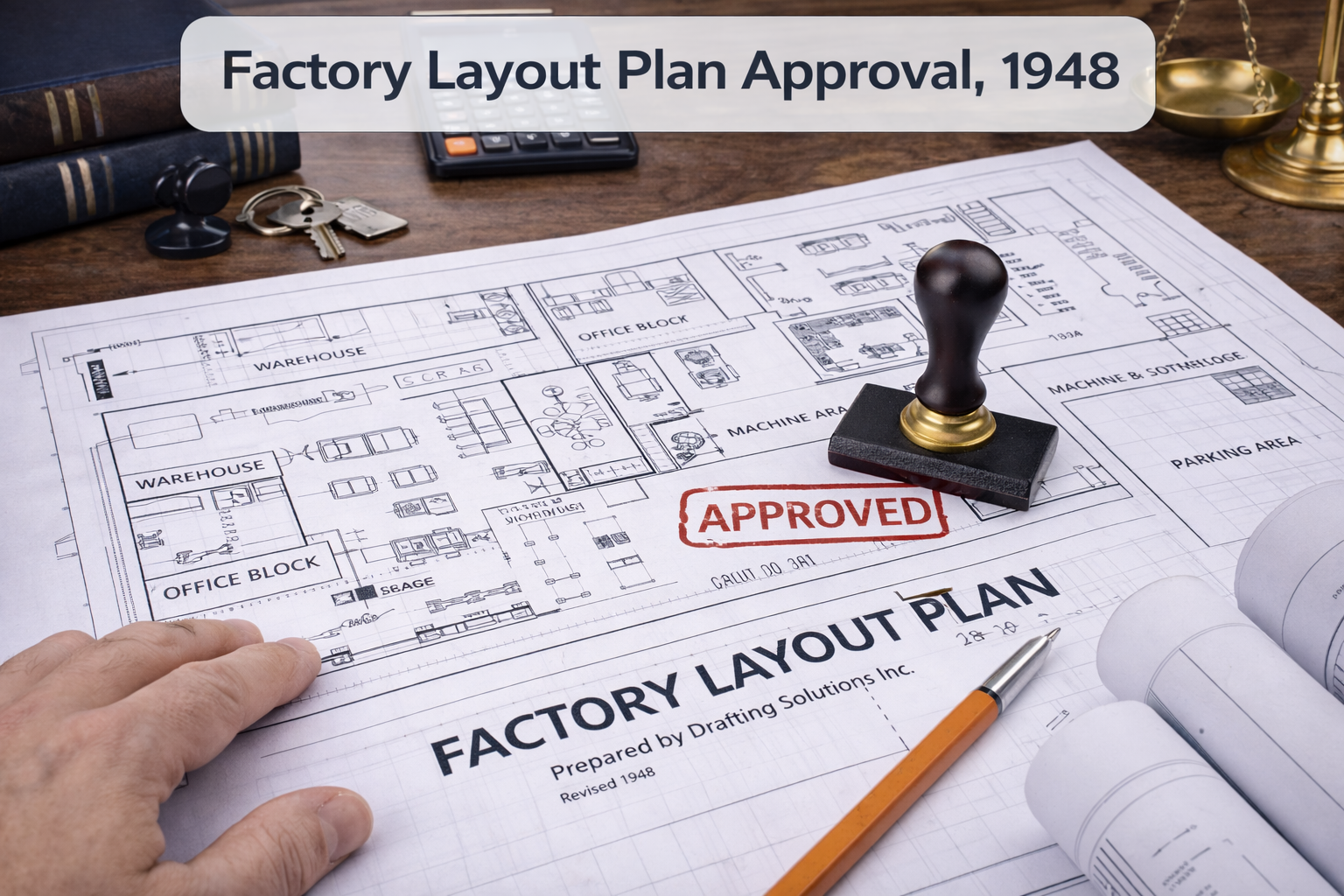
Factory Layout Plan Approval, 1948
Factory Layout Plan Approval (Factories Act, 1948) refers to obtaining prior approval from the Directorate of Industrial Safety and Health (DISH) before starting factory construction or expansion. The submitted factory building layout plan must show details like machinery placement, ventilation, safety exits, and worker facilities. Approval ensures compliance with Section 6 of the Factories Act, 1948 and related safety standards.
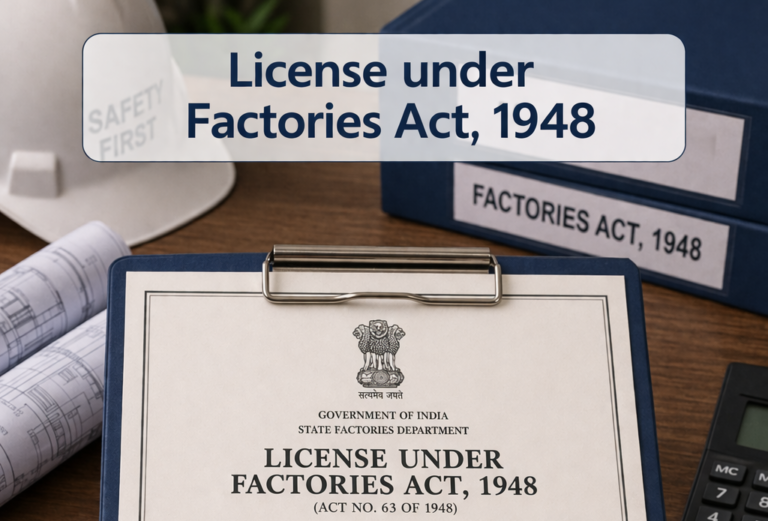
License under Factories act, 1948
License under Factories Act, 1948 is the official permission issued by the Directorate of Industrial Safety and Health (DISH) to operate a factory. It is mandatory for any premises where 10 or more workers (with power) or 20 or more workers (without power) are employed. The license ensures compliance with health, safety, and welfare provisions under the Factories Act, 1948, and must be renewed annually.
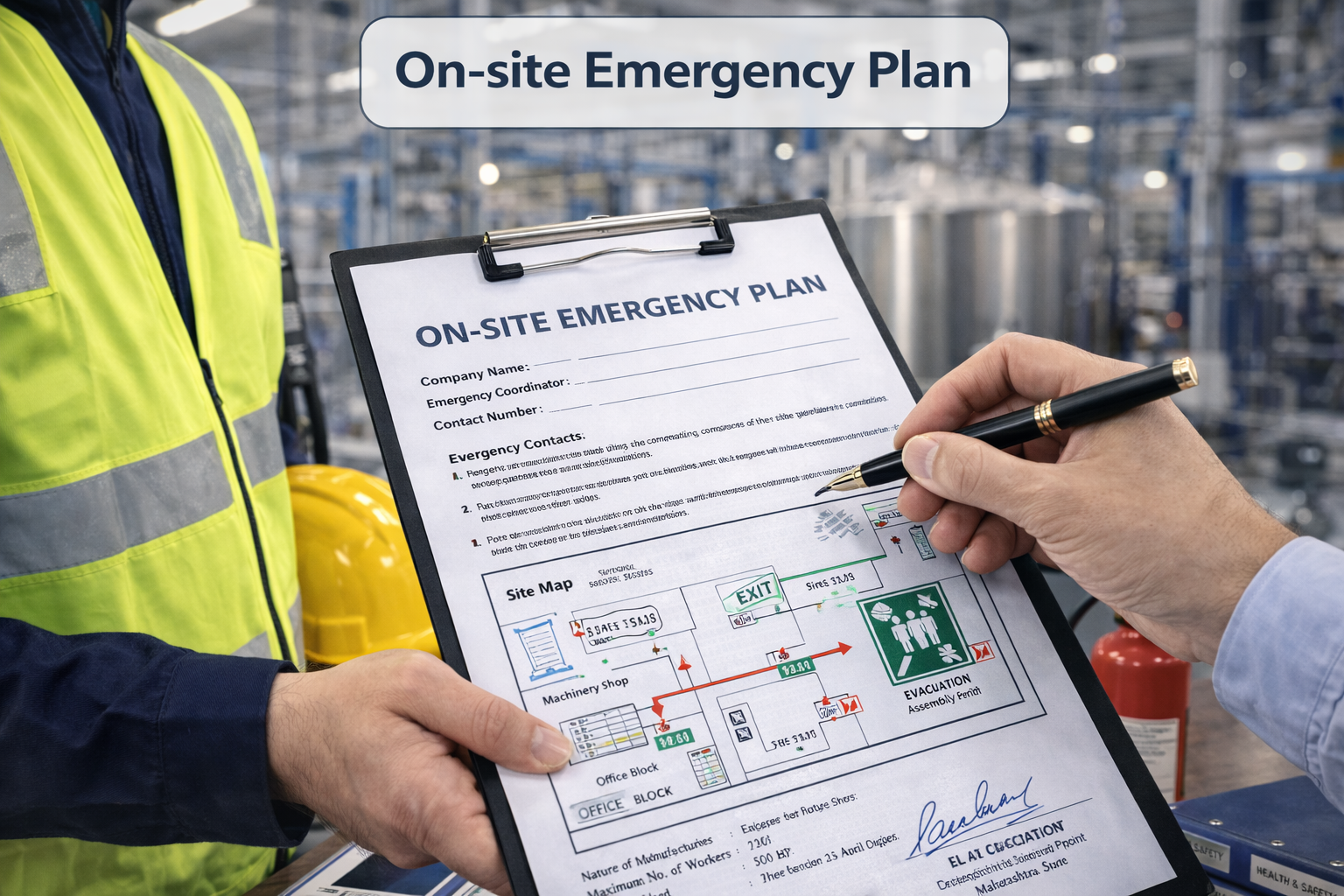
On site Emergency Plan
On-Site Emergency Plan is a safety document prepared by the factory management to handle emergencies such as fire, explosion, gas leak, or chemical spill within the premises. It outlines the roles, responsibilities, evacuation procedures, communication systems, and control measures to minimize loss of life and property. Preparation and approval of this plan are mandatory under the Factories Act, 1948 and MPCB safety norms for hazardous industries.
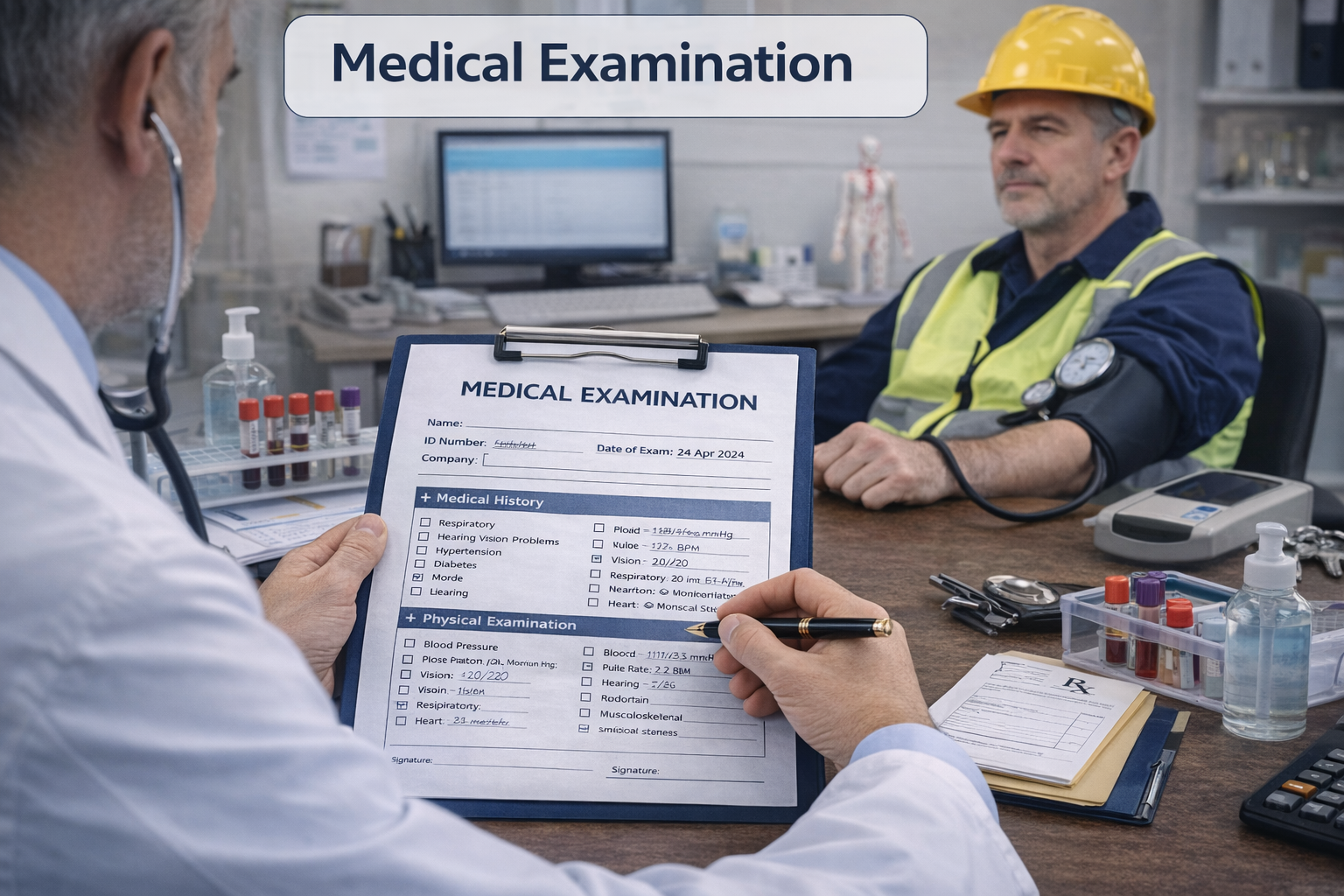
Medical Examination
Medical Examination refers to the mandatory health check-up of workers employed in a factory to ensure they are fit for work and not adversely affected by occupational hazards. It is especially required for workers exposed to hazardous processes, chemicals, dust, or fumes. The examination must be conducted by a Certifying Surgeon / Authorized Medical Practitioner as per statutory provisions. This compliance helps in safeguarding worker health, preventing occupational diseases, and ensuring adherence to factory safety norms.
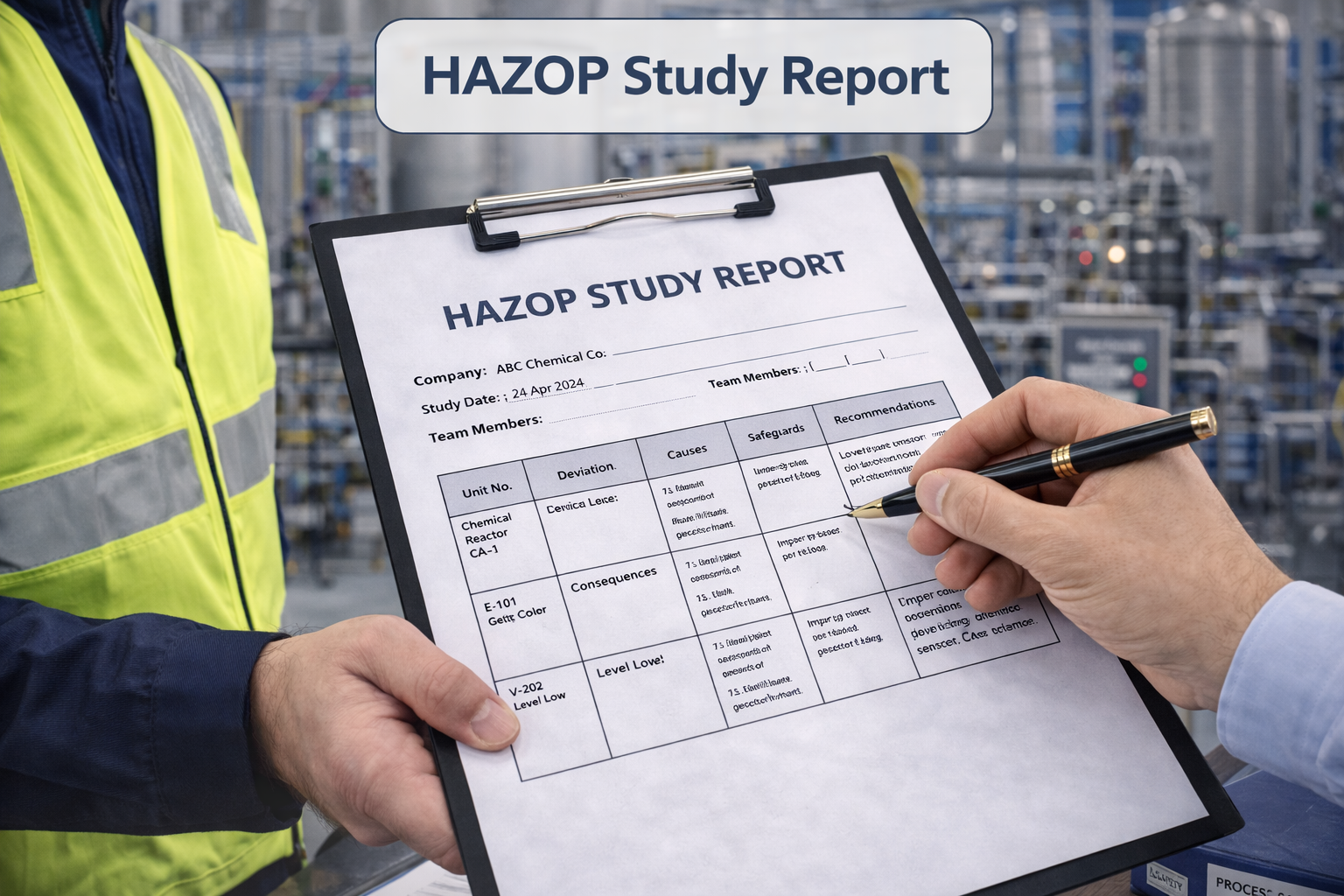
HAZOP Study Report
HAZOP (Hazard and Operability) Study Report is a detailed safety analysis conducted to identify and evaluate potential hazards and operational risks in a manufacturing process. It systematically examines process parameters like temperature, pressure, and flow to detect deviations that could cause accidents. The study helps industries implement preventive measures and is mandatory for hazardous chemical and process industries as part of their safety management system.
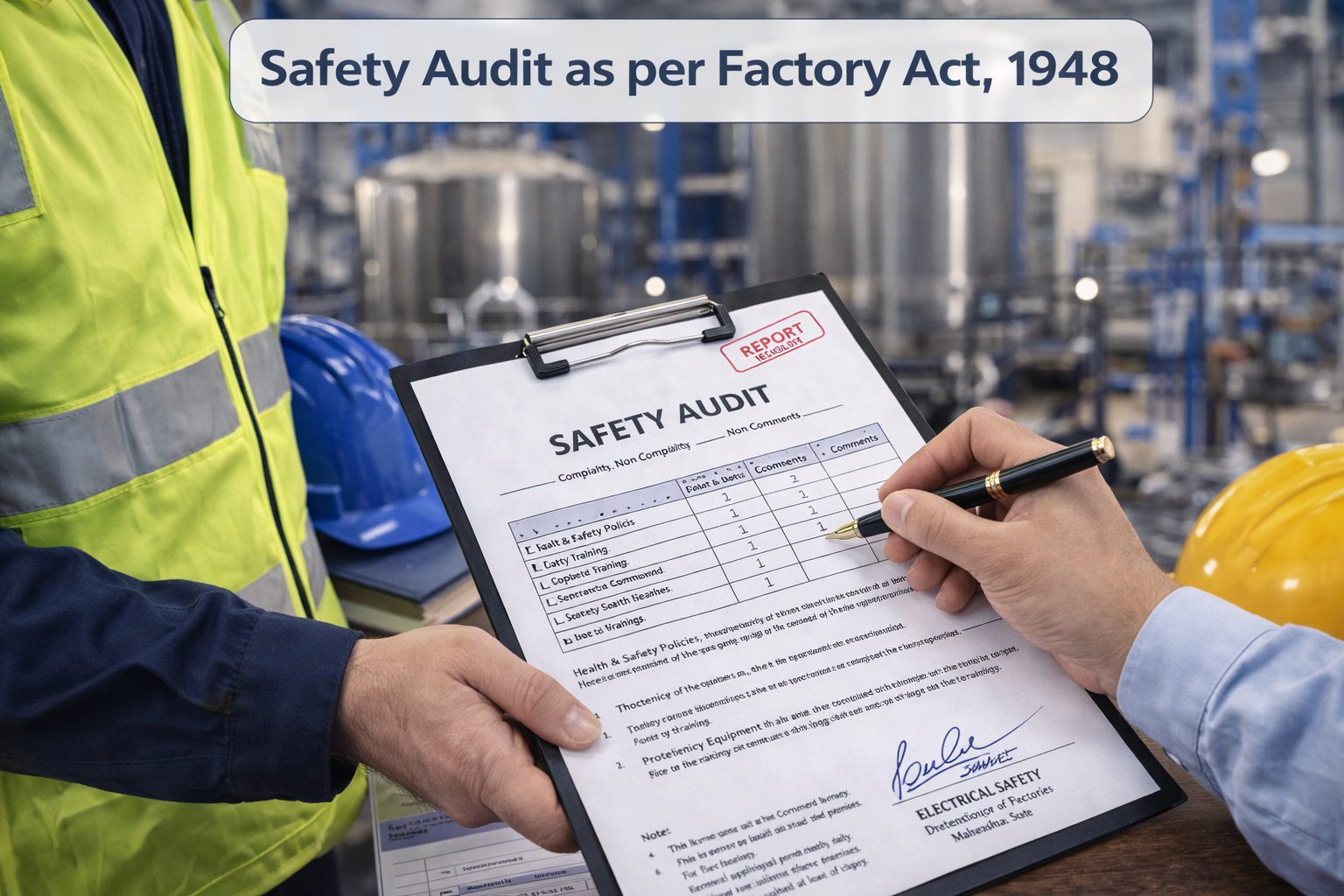
Safety Audit as per factory Act, 1948
Safety Audit (as per Factories Act, 1948) is a systematic examination of a factory’s health, safety, and environmental practices to ensure compliance with statutory requirements. Conducted by an authorized safety auditor, it evaluates areas such as machinery safety, fire prevention, hazardous material handling, and worker protection. The audit helps identify risks, recommend corrective actions, and is mandatory for hazardous process industries under Section 41C of the Factories Act, 1948.
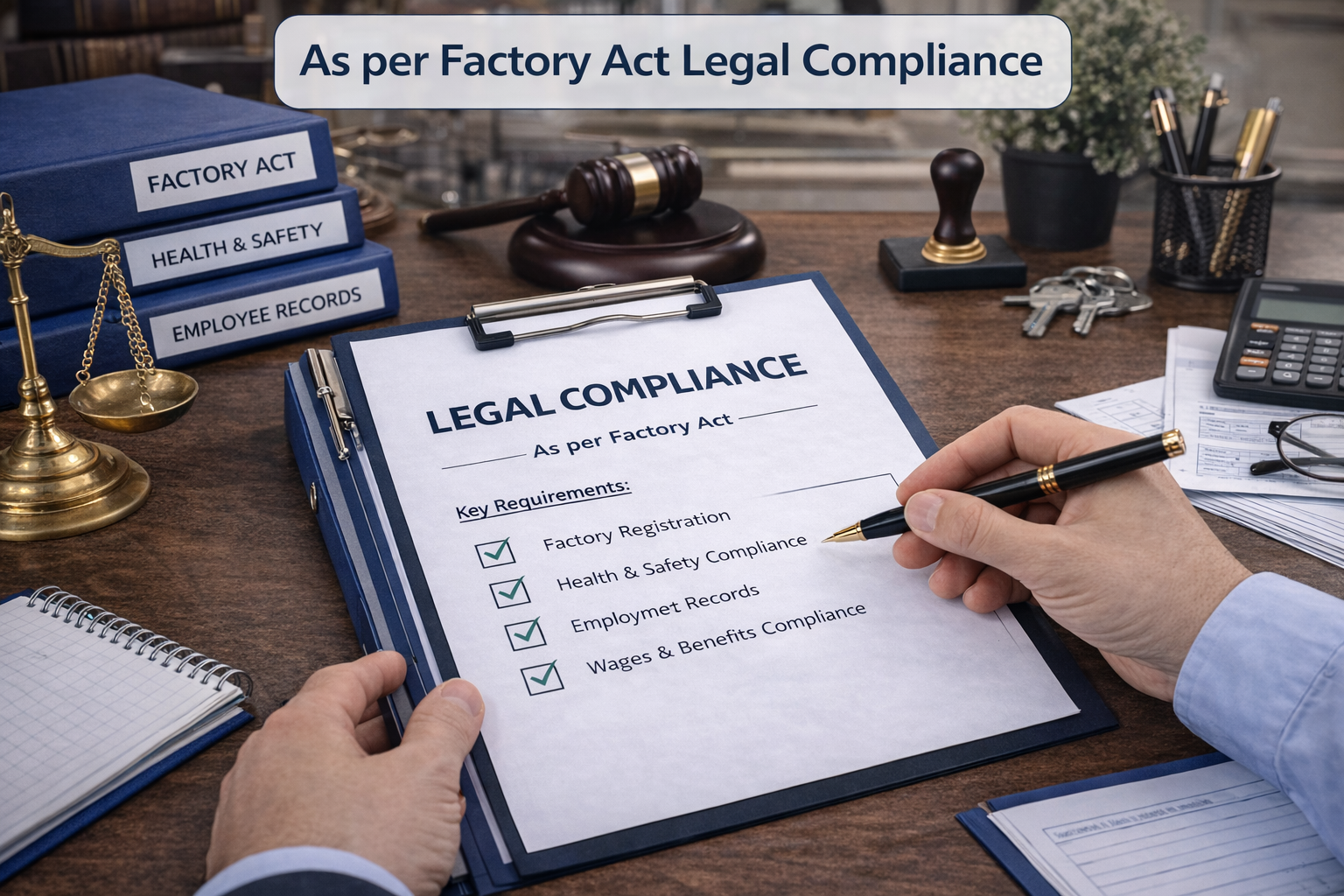
As per Factory Act Legal Compliance
Hoist & Lift Examination Report:
This report certifies that all hoists and lifts are safe for operation. It must be inspected and certified periodically by a competent person as per statutory requirements.
Annual Returns: Factories are required to submit annual returns to the concerned authority, providing details of workers, production, safety measures, and compliance status.
Machinery & Equipment Examination Report: All machinery and equipment must be examined to ensure they are safe, properly maintained, and comply with safety standards prescribed under the Act.
Stability Certificate: This certificate confirms that the factory building is structurally safe and stable, issued by a qualified structural engineer to ensure safety of workers and operations.
Annual Returns: Factories are required to submit annual returns to the concerned authority, providing details of workers, production, safety measures, and compliance status.
Machinery & Equipment Examination Report: All machinery and equipment must be examined to ensure they are safe, properly maintained, and comply with safety standards prescribed under the Act.
Stability Certificate: This certificate confirms that the factory building is structurally safe and stable, issued by a qualified structural engineer to ensure safety of workers and operations.
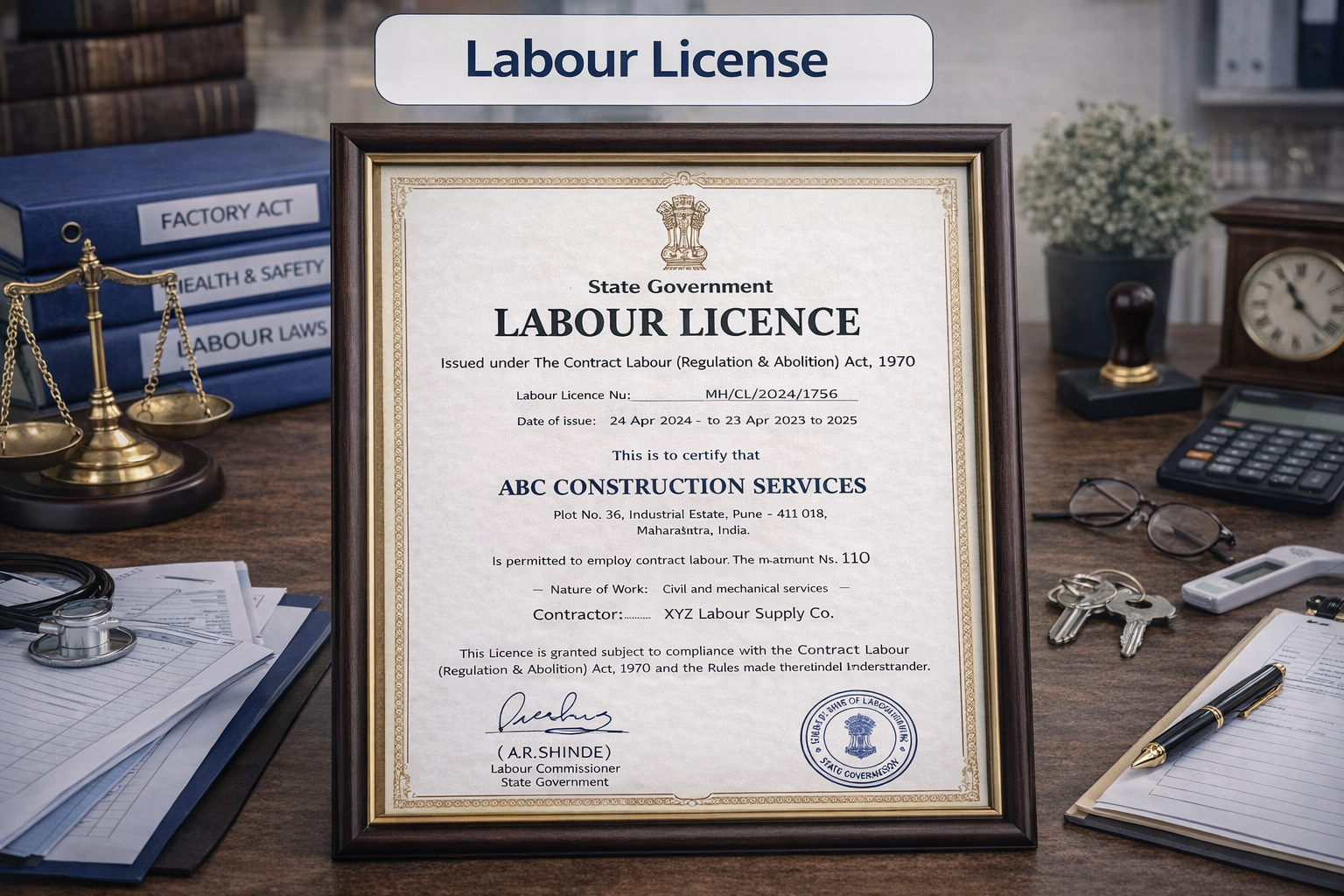
Labour License (Under the Contract Labour (Regulation and Abolition) Act, 1970)
Labour License is a mandatory registration/approval required when an establishment engages contract labour through a contractor. It ensures compliance with labour laws and protection of workers’ rights.
Principal Employer Registration: The occupier/company must obtain registration as a Principal Employer for engaging contract labour. This registration is issued by the Labour Department and is mandatory before hiring contract workers.
Contractor Labour License: The contractor who supplies or employs contract labour must obtain a Labour License specifying the number of workers permitted. It ensures compliance with statutory provisions such as wages, welfare, and safety of workers.
Principal Employer Registration: The occupier/company must obtain registration as a Principal Employer for engaging contract labour. This registration is issued by the Labour Department and is mandatory before hiring contract workers.
Contractor Labour License: The contractor who supplies or employs contract labour must obtain a Labour License specifying the number of workers permitted. It ensures compliance with statutory provisions such as wages, welfare, and safety of workers.